from ₹9,000.00
Inquiry

Kuari Pass Trek​

Not Rated
Duration

5 Night 6 Days

Tour Type

Daily Tour

Group Size

12 people

Languages

___

Overview

Kuari Pass Trek​

The Kuari Pass Trek has been on the Garhwal Himalaya trekking circuit for well over a century — Lord Curzon walked this route in 1905 and it’s carried his name informally ever since, though locals have called it Kuari long before any British viceroy arrived. What’s kept it relevant is the panorama. The view from Kuari Pass at 3,640 metres takes in Nanda Devi (7,816 metres), Dronagiri, Kamet, Hathi Parbat, Ghori Parbat, and the Trishul group — a continuous arc of high Himalayan peaks that most treks in this region only show you one or two of at a time. Here you get them all, lined up across the northern horizon like a wall. Lazymonkadventure runs this as a 5 nights 6 days guided group trek starting and ending in Rishikesh, through Joshimath.

The journey starts with the drive from Rishikesh to Joshimath, which takes the better part of the day. The route goes along the Ganges River as it flows north from Rishikesh through the Shivalik range of the Himalayas. The route goes past Devprayag, where the Bhagirathi and Alaknanda Rivers meet to form the Ganges. The route then goes past Rudraprayag and further into the Alaknanda gorge to Joshimath at 1,890 metres. The vast majority of visitors who are used to seeing the foothills of the Himalayas think this route is more spectacular than they thought it would be. Joshimath is an important town in terms of both religion and military strategy. The deity at Badrinath has its winter seat here. Joshimath is the last town before the Badrinath pass and the Tibetan border.

The trek to Kuari Pass begins from Joshimath or from the nearby village of Dhak, and it is only after three days of trekking through various forest types and meadows that one reaches the pass. The trail passes through Guling Top — a high meadow with good views — then Khulara, which is the closest camp to the pass itself. Khulara at around 3,500 metres is where most trekkers on this route have their first complete view of the Nanda Devi Sanctuary wall and where the scale of what you’re walking toward becomes properly clear. The meadow at Khulara is expansive and open, with oak and rhododendron trees bordering it at its lower ends, and this is one of the better camping spots on any trek in Uttarakhand.

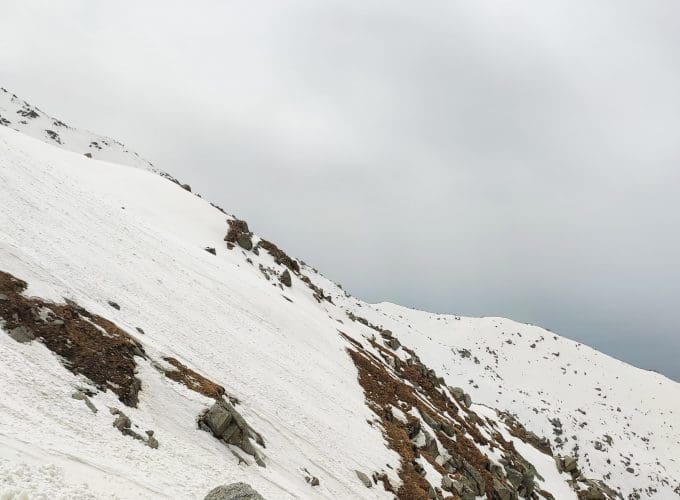
Day 4 is the pass crossing – from Khulara to Kuari Pass at 3,640 metres and back. The route to the pass is not technically hard but does gain height quickly in the last section. Weather on top can be unfavourable too. However, the view from the top is worth all the struggle. To the northeast, Nanda Devi’s double peak towers above all else. To the east, the Trishul massif rises high into the sky. Dronagiri and Kamet fill out the view to the north, while Hathi and Ghori bookend the northwest horizon. This is truly one of the finest 360-degree views of mountains available on a non-technical trek in the Indian Himalaya – and that is not a claim taken lightly.

The return from the pass descends through Khulara and then via a different route back through the Tapovan meadows toward Joshimath — a sequence of rhododendron forests, shepherd meadows, and river valley walking that shows the Garhwal landscape from a different angle than the ascent route. Day 5 brings the trek back to Joshimath and Day 6 is the return drive to Rishikesh. The difficulty level of the Kuari Pass Trek is moderate, with the highest point at 3,640 meters, and it is more of a trek than a climb. However, it is also true that it is at an altitude, and Garhwal weather can turn quickly, but treating it like an easy weekend trek is the one common factor that makes most people struggle on Days 3 and 4.

The Kuari Pass Trek is graded moderate — the highest point is 3,640 metres, the daily distances are manageable, and the terrain is trail rather than technical. But the altitude is real, the weather in Garhwal changes quickly, and treating it as an easy weekend stroll is the one consistent mistake that makes people struggle on Days 3 and 4. Lazymonkadventure keeps the group at 12 and the pacing on this trek is managed carefully — the pass view is what everyone comes for and arriving there in good condition is the whole point of the five days before it.

Highlights

  • The view from the Kuari Pass itself at 3,640m, a complete arc of high Himalayan peaks, including the majestic view of the highest peaks in the Garhwal Himalayas such as Nanda Devi (7,816m), Dronagiri, Kamet, Trishul, Hathi Parbat, and Ghori Parbat. This view ranks amongst the best non-technical summit views in the state of Uttarakhand.
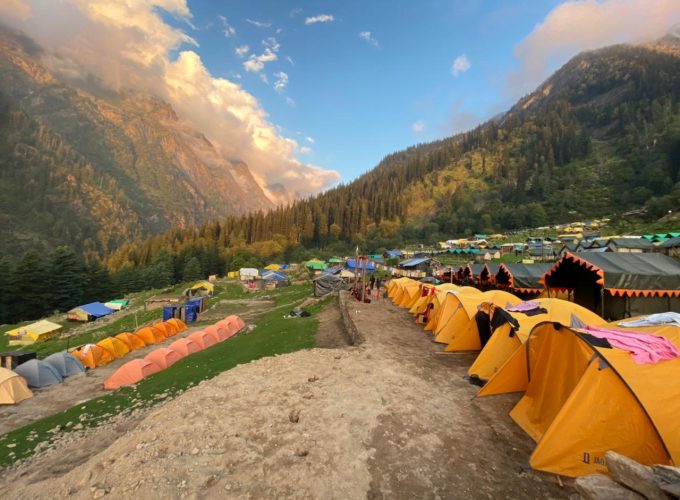
  • Khulara meadow camp at around 3,500m - a vast open alpine meadow with the Nanda Devi Sanctuary wall to the north and rhododendron forest on the lower slopes. This is the best spot to stop on the entire Kuari Pass Trek.
  • The drive from Rishikesh to Joshimath via Devprayag and Rudraprayag - the confluence of the Rivers Bhagirathi and Alaknandra at Devprayag is one of the most sacred spots in the Garhwal Himalayas and a notable visual landmark on the drive.
  • Rhododendron forest sections on the route between Joshimath and Guling Top - in March and April, the rhododendron forests on the route to Kuari Pass are in full bloom and the Kuari Pass Trek ranks amongst the best in Garhwal for viewing the Himalayan rhododendron.
  • Joshimath as the trek base – it is the winter home of the Badrinath deity at 1,890m, has a clear view of the Auli ski resort, is close to the boundary of the Nanda Devi Biosphere Reserve, and has a genuine high-mountain town feel, quite apart from the touristy places further down in the Alaknanda valley.
  • Guling Top as the first high viewpoint – the trek through the meadows at about 2,900m is the first point from which there is a clear view of the high peaks of Garhwal, and it is here that the promise of what the Kuari Pass trek itself offers is first realized in full on Day 4.
  • A trek for all seasons – The Kuari Pass trek is possible from March to June (rhododendrons in bloom, snow on the pass) and from September to November (good weather, sharp air, excellent visibility), giving members of Lazymonkadventure.com a choice of when to make the trek.

Itinerary

Day 1: Rishikesh to Joshimath — The Alaknanda Drive

  • Depart early morning from Rishikesh – The drive to Joshimath is around 250 km and takes around 8 to 9 hours. Leaving early will save you from traffic jams in Rishikesh town as well as Devprayag, where the road gets really narrow.
  • Devprayag Confluence stop on the way – This is where the Bhagirathi and Alaknanda Rivers meet to become the Ganges. The confluence is visible from a small hike down from the road. This stop will take you around 20 minutes even on a driving day.
  • Continue driving past Rudraprayag and into the Alaknanda gorge – The road runs along the valley wall above the Alaknanda River for most of this section. The gorge here is so stunning that everyone will forget to take photos and simply look at it.
  • Arrive Joshimath (1890 meters) in the afternoon – Joshimath is a proper hill town and offers a lot more than the roadside towns on the way. Check into the guesthouse, freshen up, and then go for a walk around Joshimath town.
  • Lazymonkadventure group briefing – This will include the entire Kuari Pass Trek plan, distances to be covered on a daily basis, elevation profile for the days, requirements for the nights at Khulara in terms of warm clothing, and kit requirements for all members.
  • Dinner at the guesthouse and early night. Day 2 is the first full trekking day and starts with a vehicle drop to the Dhak village trailhead before the walking begins.

Day 2: Joshimath to Guling Top — Into the Forest

  • Drive from Joshimath to Dhak village (approximately 5 km) - the starting point for the Kuari Pass Trek climb. With bags divided between day pack and porter load complete, the briefing from the Lazymonkadventure leader complete, the climb begins from the edge of the village.
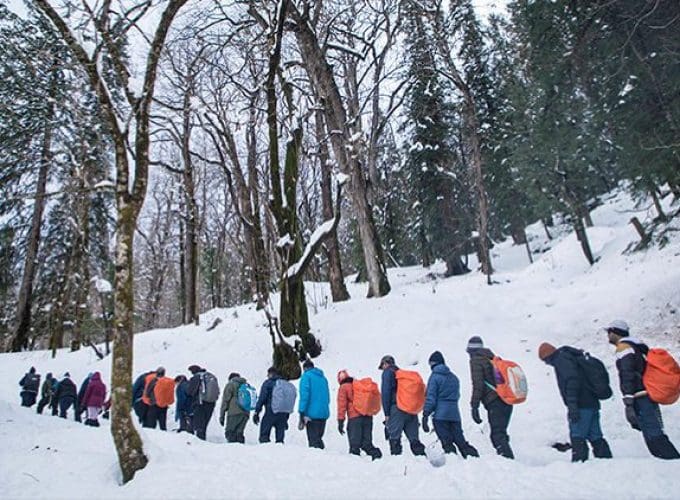
  • The climb from Dhak village begins immediately from the edge of the village via cultivated terraces before entering the oak and rhododendron forests above the village. The forest section makes up the majority of the day's climb - well-shaded and consistent gradient with the sounds of the Alaknanda valley gradually receding in the distance.
  • In the months of March and April, the rhododendron trees in this section of the Kuari Pass Trek route are in full bloom - large red and pink flowers on trees which can grow up to 15 metres in the Garhwal forests. The forest section of the route in general is lovely even when the rhododendron trees are not in bloom - the Kuari Pass Trek route through the forest section of the climb is one of the best in the Himalayas.
  • The climb from Dhak village to Guling Top involves an increase in altitude by approximately 1,000 metres over 7 to 8 km - consistent gradient rather than severe. The day should be manageable for the majority of fit individuals at a reasonable pace.
  • Guling Top - approximately 2,900 metres - the route exits the forest section and enters the high meadow with the first views of the upper Garhwal peaks to the north. Time to camp and rest in the afternoon.
  • Evening at Guling Top - the meadow section of the route is quiet - the views from the meadow improve in the afternoon light - the nights draw in sharply in the Himalayas - get the sleeping bag out early.

Day 3: Guling Top to Khulara — The High Meadow

  • Breakfast at camp, pack down personal gear, and the trail continues higher. On Day 3, we cover an area of about 6 km from Guling Top to Khulara, with an altitude gain of 600 meters to reach our camp at an altitude of 3,500 meters.
  • The trek from Guling continues through mixed forest and meadow, and it is noticeable how the nature of the trek changes on Day 3 as we ascend to higher altitudes, with the high peaks coming more clearly into view with every hour of climbing.
  • First clear view of Nanda Devi from the upper section of the trek before Khulara, with Nanda Devi at 7,816 meters being the highest peak completely within India, and getting our first clear views of it from the trek route of the Kuari Pass Trek is an experience for most trekkers.
  • Arrive at Khulara meadow at an altitude of 3,500 meters by early afternoon. The campsite is in an open meadow with the Nanda Devi Sanctuary wall to the north and long views to the east towards Trishul and to the west down the Alaknanda valley.
  • Afternoon acclimatization trek – 30 to 40 minutes up from camp to continue with acclimatization. This matters more on the Kuari Pass Trek than people expect; the difference between a good pass day and a hard one often comes down to how well Day 3 afternoon is used.
  • Dinner at Khulara camp and briefing on the Day 4 pass crossing — departure time, turnaround policy, what to carry, and weather assessment by the Lazymonkadventure leader. Tomorrow is the main event.

Day 4: Khulara to Kuari Pass & Back — The Summit Day

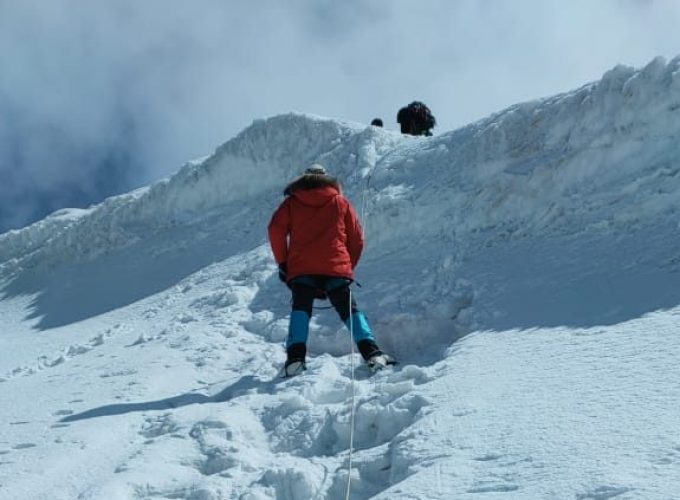
  • An early start today. Breakfast by 6 am and start by 6:30 am. The distance to Kuari Pass from Khulara is about 4 km with a total ascent of 150 metres to the pass at 3,640 metres. While the distance and ascent figures indicate a moderate day’s walk, the high altitude demands a steady pace throughout the day.
  • The route from Khulara to Kuari Pass offers a view of the Himalayas gradually. While the view increases incrementally as the altitude increases, by the time the walker is just 30 minutes away from the pass, the full view opens up.
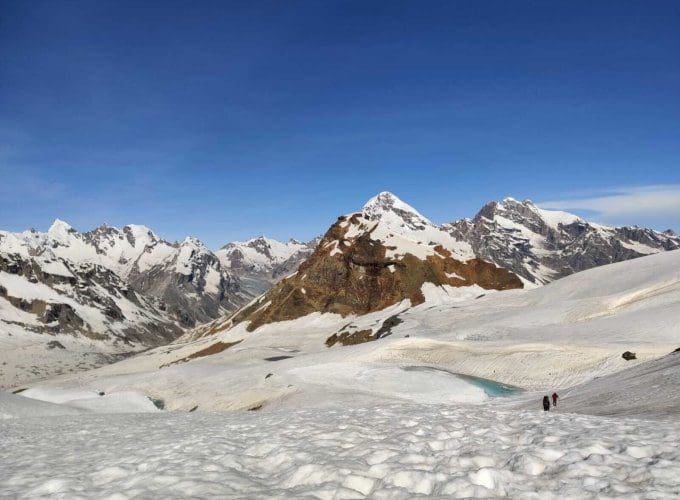
  • Kuari Pass – Altitude 3,640 metres. When the walker arrives at the Kuari Pass, the view opens up. Nanda Devi (7,816m) in the northeast, Dronagiri (7,066m) to the north, Kamet (7,756m) to the northwest, Trishul (7,120m) to the east, Hathi Parbat (6,727m) and Ghori Parbat (6,708m) to the northwest.
  • Time at the pass: this would be approximately 45 minutes to an hour depending on the weather. Clouds form on the Garhwal ridges in the afternoon. The Lazymonkadventure leader would be keeping an eye on the conditions. The turnaround time would be fixed before the climb and would not be altered even if the view is good.
  • Descent from Kuari Pass to Khulara: this would take 2 to 3 hours descending the same route. The descent uses different muscles from the climb and is tougher on the knees.
  • Back at Khulara camp by early afternoon. Hot lunch, rest, and the satisfaction of having stood at the point the entire Kuari Pass Trek was built around. Second night at Khulara, early sleep.

Day 5: Khulara to Tapovan — The Return Route

  • The return route from Khulara back to Joshimath takes a different trail from the way up, via the Tapovan meadow, which provides variation on the descent route and offers a different view of the Nanda Devi buffer zone forest and pasture landscape.
  • The route via Tapovan goes through a series of shepherds’ meadows and dense rhododendron and oak forests; the view of the high peaks is different from this side, with the Trishul group prominent and the Nanda Devi silhouette seen from a different angle.
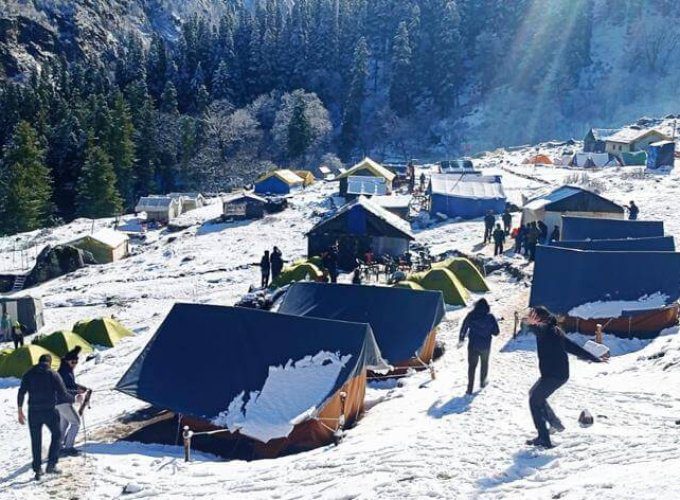
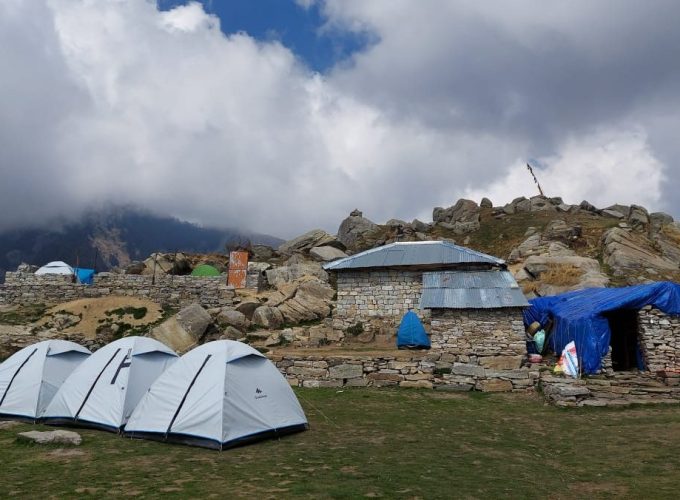
  • Tapovan meadow camp (approx. 2,600 metres) – a lower and warmer camp than at Khulara, and the last camp on the Kuari Pass Trek. The forest closes in on two sides and the meadow stream provides good water and a pleasant camp sound through the night.
  • Day 5 is a longer distance day — approximately 10 to 12 km from Khulara to Tapovan — but the continuous descent makes it feel more manageable than the climbing days. Pace yourself on the forest section and don't rush the final hour.
  • Arrive at Tapovan by mid-afternoon. Set up camp, rest, and eat well. The Lazymonkadventure cook typically puts in extra effort on the final camp dinner — it's the last proper mountain meal of the trip.
  • Evening briefing on Day 6 — the Tapovan to Joshimath trail section and the vehicle return timing to Rishikesh. Confirm onward transport arrangements for after the Rishikesh arrival.

Day 6: Tapovan to Joshimath & Drive to Rishikesh

  • Final morning at camp – breakfast, pack down, and last section of trail back to Joshimath via Tapovan. This section is approximately 6 km and takes us down into the town via forest and fields in approximately 3 hours at a leisurely pace.
  • Arrive Joshimath mid-morning. Brief stop at the guesthouse to freshen up, have a decent sit-down meal for a change, and attend to any outstanding matters before loading up for the journey to Rishikesh.
  • Optional stop before leaving Joshimath – the Narsingh Temple in the town center is one of the most important religious sites on the Garhwal circuit and can be a 20-minute stop if there is interest. The Auli cable car station is also nearby for those wanting a quick aerial view of the ski resort.
  • Drive Joshimath to Rishikesh – reverse of Day 1, past all those gorges and conflences again, but in the opposite direction and under different lighting conditions. The Devprayag stop on the return is worth repeating if time allows.
  • Arrive in Rishikesh by early evening. Lazymonkadventure trip leader does the final debrief and coordinates the official group close. The Kuari Pass Trek has been completed, consisting of five days of trekking, one pass at 3,640 metres, and a view worth every step of the long approach.
  • Travel to Rishikesh - Overnight trains and buses to Delhi leave in the evenings. Most people have returned to Delhi the next morning, which is the correct end for a trek that began there six days ago.

Included/Excluded

  • 5 nights accommodation on the Kuari Pass Trek - a guesthouse in Joshimath on Night 1, and tented camps at Guling Top, Khulara (2 nights), and Tapovan on the return, all arranged and taken care of by the Lazymonkadventure team.
  • All meals from dinner on Day 1 through breakfast on Day 6 — hot breakfasts every morning, packed trail lunches on trek days, and hot cooked dinners at all campsites and the Joshimath guesthouse.
  • All road transfers on the Kuari Pass Trek - the Rishikesh to Joshimath road transfer on Day 1 and the Joshimath to Rishikesh road transfer on Day 6.
  • A dedicated Lazymonkadventure Trip Leader throughout the 6-day trek - to ensure the group stays on track on the trek, and to take care of all the logistics and arrangements.
  • All applicable forest entry fees, trekking permits, and campsite charges for the Kuari Pass Trek route through the Nanda Devi Biosphere buffer zone.
  • Tent and sleeping arrangements on the Kuari Pass Trek - Lazymonkadventure will take care of setting up and dismantling the campsites, so the only thing the trekker has to carry on the trek itself is personal gear.
  • First aid kit will be carried on the trek, and emergency contacts will be established with the Lazymonkadventure office in case of a medical emergency. Additionally, a group briefing will be conducted on Day 1 in Joshimath.
  • Travel to Rishikesh – trains and buses from Delhi to Rishikesh take 5 to 7 hours and are your own booking. The trek to Kuari Pass begins on Day 1 in Rishikesh and ends on Day 6 back in Rishikesh.
  • Personal travel insurance – trekking at altitude in the Garhwal Himalayas with a pass crossing at 3,640 meters requires personal medical and emergency evacuation cover prior to commencing the trek.
  • Meals other than those included in the itinerary – lunch and dinner on Day 1 prior to assembling as a group in Rishikesh, and any personal purchases of food and drinks during the trek.
  • Personal trekking gear – trekking shoes with ankle support, warm clothing for nights at Khulara (temperatures drop to 0-5°C), rain gear, trekking poles, and a headlamp are your own responsibility.
  • Personal expenses incurred during the trek – tips to trip leader and/or support staff, any snacks from tea stalls, personal purchases in Joshimath, and any monastery/temple entry fees.
  • Any optional activities beyond the 6-day trek to Kuari Pass as described in this itinerary – e.g. visiting Auli ski resort, Badrinath, Hemkund Sahib, etc. are your own booking and expense.
  • Any costs incurred due to circumstances beyond our control – e.g. weather-related trail closures, road blockages on Rishikesh-Joshimath highway, medical emergencies, etc.

Durations

5 Night 6 Day

Tour's Location

FAQs

What is the best time to visit?

The best time to undertake the Kuari Pass trek is typically during the summer and autumn months, specifically from March to April and September to November. This period offers the most favorable weather conditions for trekking.

What’s the difficulty level of the trek?

The Kuari Pass trek is considered a moderately challenging high-altitude trek. This is a beginner-friendly trek with manageable trekking conditions.

Can we rent equipment for the trek?

Lazy Monk Adventure does provide easy accessibility to almost all types of equipment required for the Kuari Pass Trek on a rental basis with reasonable prices and extremely good quality. The equipment can be arranged on prior notice.

How is the weather during the trek?

During the Kuari Pass trek, average daytime temperatures can range from 13°C to 15°C. Nights are much colder, with temperatures often plunging below freezing, temperatures can range from -3°C to -4°C.

What is the trek height?

The Kuari Pass Trek typically reaches its highest point at 12,516 feet above sea level.

Reviews

0/5
Not Rated
Based on 0 review
Excellent
0
Very Good
0
Average
0
Poor
0
Terrible
0
Showing 1 - 0 of 0 in total

Write a review

from ₹9,000.00

Inquiry