from ₹15,000.00
Inquiry

Spiti Valley Summer Trip from Delhi/Manali

Not Rated
Duration

6 Night 7 Days

Tour Type

Daily Tour

Group Size

9 people

Languages

___

Overview

Spiti Valley Trip

Spiti Valley is the sort of place that is hard to put into words, because words are always looking for the dramatic, and the place itself is somewhat more specific than dramatic. It is stark, high, cold even in the height of the summer, and unlike anything else in Himachal Pradesh. The land is lunar in the most literal sense – rocky, grey-brown, river valleys carved out by glaciers, ancient Buddhist monasteries perched on cliff tops as if they have been put there as some kind of philosophical gesture. The 6 nights & 7 days Spiti Valley Summer Trip from Delhi/Manali that Lazymonkadventure offers is designed with this landscape in mind, not racing through the scenery but taking the time to move through the place properly.

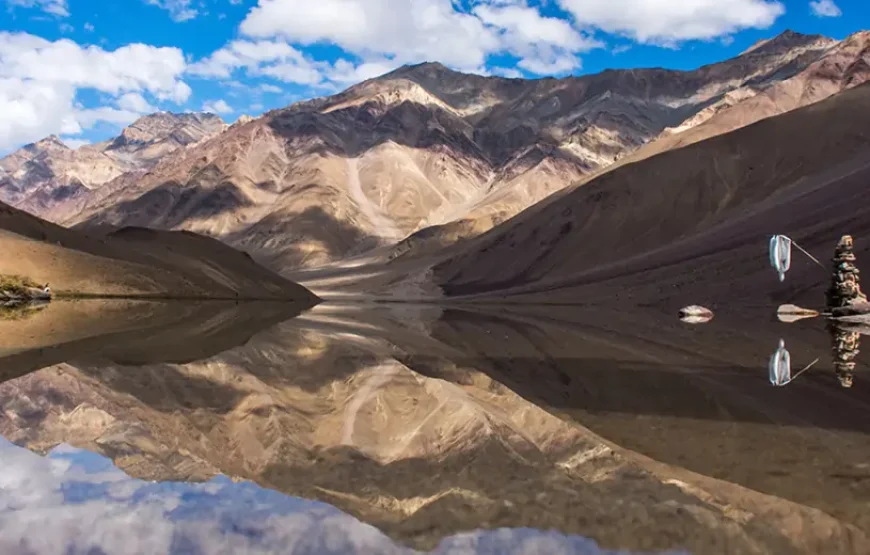
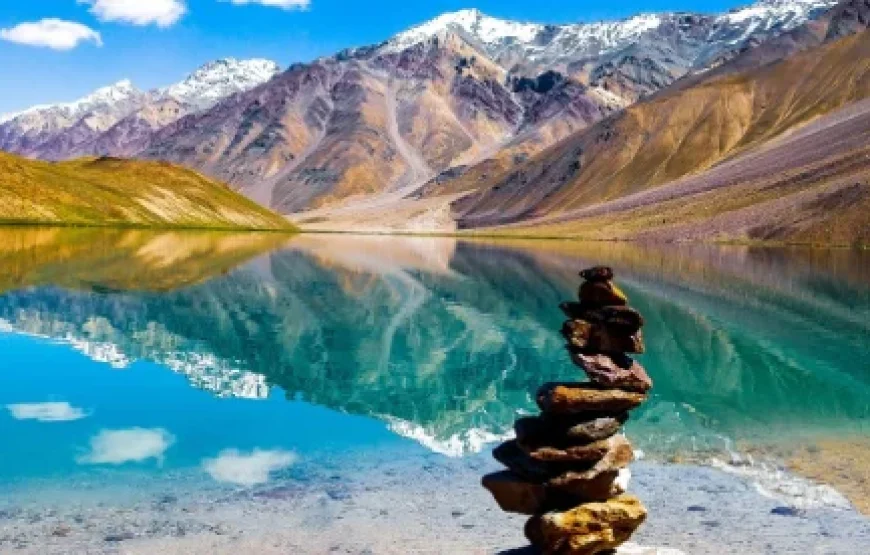
The route to Spiti is through the Manali side, and this is the recommended route for entering this valley in summer. The road over Rohtang Pass or Atal Tunnel for the lower part opens up the route to Chandratal Lake on Day 2, one of the most photographed high-altitude lakes in the Himalayas, situated at an altitude of about 4,300 meters in a cirque above the Chandra River. The shape of this lake, the snowfields, and the absence of any commercial development within several kilometers of this lake make it one of the unspoiled camp sites. Most people who camp here and stay the night report that the star show over Chandratal Lake is the best they’ve seen anywhere. That is a high standard. It’s an accurate one.

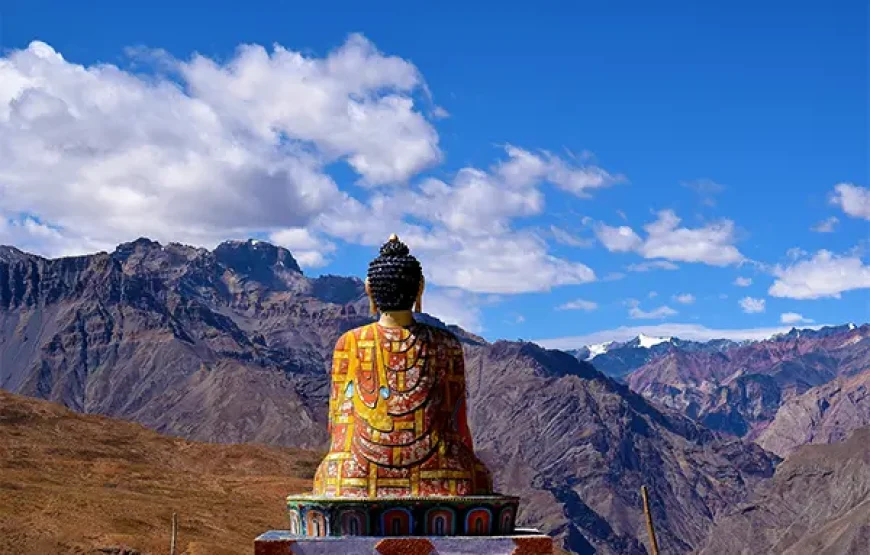
Kaza is the administrative and commercial centre of Spiti and the Spiti Valley Summer Trip from Delhi/Manali uses it as a base for Day 4 — a full day covering the high villages of Hikkim, Komik, and Langza. Hikkim holds the record for the world’s highest post office at 4,400 metres — a working government post office where you can actually send mail. Komik, at around 4,587 metres, claims to be one of the highest inhabited villages in the world with motorable road access. Langza has a large Buddha statue overlooking the valley and is known for its marine fossils — the entire valley floor was once a Tethys Sea seabed and the ammonite fossils found in and around Langza are a tangible reminder of a geology operating on a scale that makes seven days feel very short.

Nako on Day 5 is a significant shift from the Kaza plateau. The village sits above a small lake at around 3,662 metres in the Kinnaur-Spiti border zone, with views of the Kinner Kailash range and the confluence of the Spiti and Sutlej rivers visible below. The drive from Kaza to Nako follows the Pin-Spiti confluence and passes through the Sumdo checkpoint — the entry into the restricted Inner Line zone. The landscape between Kaza and Nako transitions from the high desert of upper Spiti to a slightly greener, more agricultural character as altitude drops and the proximity to Kinnaur makes itself felt.

Chitkul on Day 6 and the exit toward Shimla on Day 7 complete the Spiti Valley Summer Trip from Delhi/Manali with two of the most scenically distinct stops on the entire route. Chitkul, in the Baspa Valley, is the last inhabited village on the Indo-Tibetan border road — beyond it the route is closed to civilian travel. The village is small, traditional, and sits beside the fast-running Baspa River with snow peaks directly above. The drive out via Sangla, Sarahan, and the Sutlej Valley to Shimla is one of the more scenic road journeys in Himachal, dropping through apple orchards, temple towns, and river gorges as the altitude comes down from the Spiti heights. The trip exits where it entered — via a major city — but the seven days between Delhi/Manali and Shimla cover more landscape variety than most month-long itineraries manage.

Lazymonkadventure offers a Spiti Valley Summer Trip, starting from Delhi/Manali, between May and October, which is the time when both Rohtang and Kunzum passes are open, and one can drive into the valley. June and September are considered the best months, when skies are clear, roads are open, and one gets to experience the cold dry air typical to the valley, rather than the dust associated with peak season or the unpredictability of snow in early season. The group size will be limited to 8, and a comfortable private cab will be arranged. Seven days in Spiti moves fast. This itinerary is built to slow it down as much as the route allows.

Highlights

  • Chandratal Lake 4,300 metres, overnight camping beside the crescent-shaped glacial lake with snowfields above the water and a night sky that a lot of people on the Spiti Valley Summer Trip from Delhi / Manali describe as the single best of the trip.
  • Hikkim, Komik and Langza in a single day from Kaza, the world's highest post office at 4,400m, the one of the highest motorable villages on earth at Komik (4,587m), the marine fossil beds and hilltop Buddha at Langza.
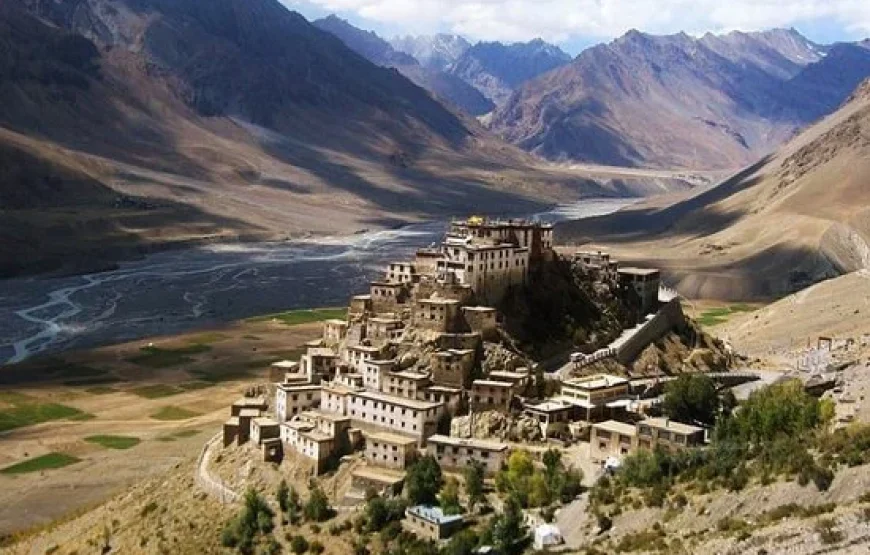
  • Key Monastery above Kaza, a 1,000-year-old Tibetan Buddhist gompa at 4,166 metres, one of the most important gompas in Spiti, sitting on a hilltop overlooking the entire Spiti River valley.
  • Nako village and lake at 3,662 metres in the Kinnaur-Spiti border zone, with the Kinner Kailash range across the valley and the Spiti-Sutlej confluence visible in the gorge below.
  • Chitkul in the Baspa Valley, the last inhabited village on the Indo-Tibetan border road, beside the fast Baspa River with snow peaks directly overhead and a traditional Kinnauri character entirely different from the villages of the Spiti plateau.
  • The Manali to Chandratal drive via Atal Tunnel and Kunzum Pass, one of the great high-altitude road sequences in India, crossing from Kullu into Lahaul and then into upper Spiti across a 4,551-meter pass.
  • A true end-to-end Spiti circuit, the Spiti Valley Summer Trip from Delhi / Manali enters from the western end at Manali, crosses the valley from west to east, and exits via the Kinnaur route to Shimla, giving a full geographic coverage of Spiti in one single journey.

Itinerary

Day 1: Arrival in Manali — Camp Setup & Briefing

  • Arrive in Manali. Most people arrive the night before on the Volvo bus from Delhi. The journey takes about 14-16 hours. You will arrive in Manali in the morning. You will stay at the Lazymonkadventure campsite near Manali town. You will freshen up and have breakfast before anything else.
  • Lazymonkadventure group briefing with your tour guide. This will cover the complete 7-Day Spiti Valley Summer Trip from Delhi/Manali complete itinerary.
  • Visit Manali in the afternoon. Visit Hadimba Temple in the forest of Deodar Trees. This is just 15 minutes away from the main market of Manali. Then visit Old Manali on the other side of the bridge. Visit Manu Temple at the very end of Old Manali.
  • Visit Mall Road in the evening. If you need any last-minute gear or supplies, Manali is a good place to get things. You will not get good gear after Manali until Day 4 when you reach Kaza.
  • Dinner at the campsite. This is the first time the Lazymonkadventure cook will set up the camp kitchen. Early night recommended. The drive to Chandratal on Day 2 is long and will start early.
  • Equipment check and bag sort — confirm your personal day bag for tomorrow versus luggage going in the vehicle At Chandratal, one needs to carry only what is required for a night’s camping, and the rest remains in the vehicle.

Day 2: Manali to Chandratal — Crossing into Spiti

  • Early start from Manali. Breakfast at 6:30 am, vehicle loaded and on the road by 7:30 am. The drive to Chandratal is about 120 km and takes about 5 to 6 hours depending on road conditions and Rohtang/Atal Tunnel traffic.
  • Atal Tunnel/Rohtang Pass — The lower route using the Atal Tunnel, which is 9.2 km long, avoids the altitude of the Rohtang Pass and is quicker on most occasions. The Rohtang Pass is used in early season when snow conditions are good.
  • Kunzum Pass at an altitude of 4,551 metres — The high mountain pass marking the entrance to the Spiti Valley. There is a small temple at the top, and the views of the Kullu and Lahaul mountain ranges are spectacular.
  • Descend to the turnoff to Chandratal. The lake is 14 km down the dirt road from the pass. This is the final section of the day and one of the more spectacular landscape changes on the Spiti Valley Summer Trip from Delhi/Manali.
  • Arrive at Chandratal Lake (4,300 metres) by early afternoon. The crescent lake appears suddenly at the end of the track — turquoise water, surrounding snowfields, and almost no facilities. Set up camp, eat lunch, and walk the lake perimeter (about 2.5 km round trip).
  • Evening and overnight at Chandratal. Dinner is cooked at camp. Stay outside as long as possible, managing the cold. The sky is spectacular. The lake reflects the starlight on a good night. No light pollution of any kind for thousands of kilometers. The Milky Way is visible.

Day 3: Chandratal to Kaza — Into the Heart of Spiti

  • Sunrise at Chandratal before packing down camp — the light on the lake and the surrounding peaks in the first hour is the best visual of the overnight stop. Set an alarm. It lasts about 20 minutes before the quality normalises.
  • Pack down camp after breakfast — the Lazymonkadventure team breaks down the tents and kitchen. Leave no trace is strictly enforced around Chandratal, as the place is a protected zone and all rubbish goes out with the group.
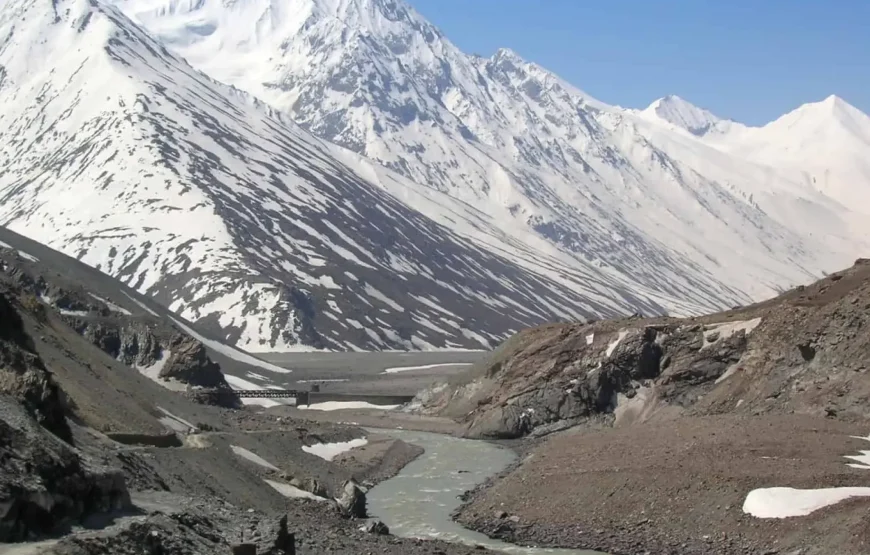
  • Drive from Chandratal to Kaza, approximately 75 km, 3 hours. The road goes down from the lake plateau and follows the Spiti River east through the main valley. This is the first taste of the Spiti Valley, the bare brown mountains, the thin blue line of the river, and the scale of the sides of the valley.
  • Visit Key Monastery on the way – visit the 1,000-year-old gompa, 4,166 meters above Kaza. The monastery is an important repository of thangkas, scriptures, and other religious items, and the location on the conical hilltop provides an unobstructed view of the entire Spiti River Valley in both directions
  • Arrive Kaza in the afternoon – the largest town in the Spiti Valley, 3,800 meters. Arrive, check into the guesthouse, and explore the main market and find a nice cafe. Kaza is the largest town in the region and has the most developed traveler infrastructure, with a few decent restaurants and some shops selling local handicrafts.
  • Free afternoon in Kaza – the Lazymonkadventure leader will brief the group on the Day 4 circuit through the villages and what to expect in Hikkim, Komik, and Langza. Sleep well, as the drives to the high villages tomorrow will take the group as high as 4,600 meters.

Day 4: Kaza — Hikkim, Komik, Langza Village Circuit

  • Day trip from Kaza base covering the three high villages to the north and northeast. Depart after breakfast by 9 am, as the roads to these villages are narrow and rough, and best done in the mornings before the afternoon winds start.
  • First, go to Hikkim, the world's highest post office, situated at 4,400 metres, and a functioning Government of India post office. Buy a postcard, write something, and actually send it. The postmark from Hikkim, Spiti, HP is a really memorable thing to send to someone.
  • Komik from Hikkim — a short drive further to one of the highest motorable villages in the world at approximately 4,587 metres. The Tangyud Monastery in Komik is active, with resident monks, and the village view of the surrounding Spiti plateau is one of the better wide-angle perspectives on the Spiti Valley Summer Trip from Delhi/Manali.
  • Langza — drive back down and across to the village known for its large hilltop Buddha statue and its marine fossil beds. The entire Spiti Valley was submerged under the Tethys Sea millions of years ago and the ammonite fossils found in and around Langza are sold by local children and accessible in the surrounding hillside.
  • Back to Kaza for lunch and an afternoon rest – the high village circuit is around 60 km of mountain road and by the time you're back in Kaza, the high altitude will have taken its toll.
  • Second night in Kaza – the Lazymonkadventure leader will brief on the Day 5 drive to Nako and the Inner Line Permit checkpoint at Sumdo. Confirm your ID documents are accessible; the checkpoint is a formal entry point into the restricted zone.

Day 5: Kaza to Nako — Border Country

  • Departure Kaza after breakfast and heading southeast down the Spiti Valley. The drive to Nako is about 110 km and will take between 4 to 5 hours, including a stop at the Sumdo checkpoint.
  • Pin Valley confluence can be seen from the road. Pin River joins Spiti River from the north at Attargo, and two rivers running side by side in different colours is one of those strange natural details that remains with you.
  • Sumdo checkpoint: verification of Inner Line Permit for all foreign nationals and registration for Indian nationals. Your Lazymonkadventure leader handles the paperwork but everyone carries their own ID. The checkpoint marks the formal entry into the Kinnaur-Spiti restricted zone.
  • The landscape between Sumdo and Nako transitions noticeably — the upper Spiti desert gives way to slightly more vegetated hillsides as altitude drops toward the Sutlej confluence zone. The Kinner Kailash range appears on the eastern horizon for the first time.
  • Arrive at Nako village (3,662 metres) by early afternoon. The village is situated around a small lake, which is surrounded by poplars and willows, creating a striking contrast to the barren valley roads. The Nako Monastery, located on the shores of the lake, has 10th-century origins.
  • Evening walk around the Nako lake and the village – the view from the upper village to the Kinner Kailash range, down to the Sutlej gorge below, is one of the most quiet but impressive views of the entire Spiti Valley Summer Trip from Delhi/Manali.

Day 6: Nako to Chitkul — The Baspa Valley

  • Breakfast in Nako, check out, and drive south and east towards the Baspa Valley. The drive from Nako to Chitkul goes via Pooh and Khab – the place where the Sutlej and Spiti Rivers join – and then turns north towards the Baspa Valley and the villages of Sangla and Chitkul.
  • Khab confluence – the confluence of the Spiti and Sutlej Rivers at around 2,500 meters is one of the more spectacular moments of the Spiti Valley Summer Trip from Delhi/Manali. Two of the bigger Himalayan Rivers – and they are obviously different in colour and volume – joining in a narrow gorge.
  • Drive up the Baspa Valley via the town of Sangla – the Baspa Valley is a lush and heavily forested valley with pine and apple trees and is like a different Himachal Pradesh from the arid landscape of the Spiti Valley. The Baspa River flows fast and cold at the bottom of the valley.
  • Arrive at Chitkul (3,450 meters) by early afternoon – the last inhabited village on the Indo-Tibet border road and just a few kilometers further on is the border itself. Chitkul has traditional Kinnauri wooden houses and a small temple and the Baspa River flows fast and cold right next to the village.
  • Afternoon at Chitkul – walk around the village, sit on the riverbank, visit the small temple at the top of the village. This is a very quiet place and the afternoon here is perhaps the most peaceful of the entire week.
  • Dinner at Chitkul and the last overnight of the Spiti Valley Summer Trip from Delhi/Manali. The Lazymonkadventure leader briefs on the Day 7 drive to Shimla — a long day, mostly descent, starting early.

Day 7: Chitkul to Shimla — The Long Road Out

  • Early start from Chitkul – breakfast at 6:30 am, loading of the vehicle by 7:30 am. Distance between Chitkul and Shimla is around 230 km and the journey would take around 7-8 hours depending on the road conditions in the Kinnaur gorge.
  • Drive down the Baspa Valley via Sangla and join the National Highway along the Sutlej at Karcham. The Karcham Wangtoo Dam project has changed this section of the road significantly — the valley narrows into gorge country with the highway cut into vertical rock faces above the river.
  • Rampur and Narkanda en route – Rampur is an important Kinnauri market town and is worth stopping to have a cup of chai and stretch the legs. Narkanda, at an altitude of 2,700 meters, is the last mountain town before the road descends down towards Shimla, and the views from the town are often of the Shali Tibba range.
  • Arrive in Shimla in the late afternoon – check into the Lazymonkadventure-arranged accommodation, drop the bags, and have a decent sit-down meal. After seven days of camp food and remote guesthouse kitchens, Shimla's restaurant options feel like an upgrade regardless of what you order.
  • Lazymonkadventure trip leader final debrief – discusses the various options of transportation out of the region towards Delhi, the connections of the buses and the trains out of Shimla towards Delhi, and the close of the Spiti Valley Summer Trip out of Delhi/Manali.Buses out of Shimla towards Delhi take between 8-10 hours overnight.
  • End of the Spiti Valley Summer Trip out of Delhi/Manali.Seven days, one complete valley crossing, from the Kullu side to the Kinnaur exit. Shimla to Delhi by overnight bus gets you home by morning — which is the right way to end a trip that started the same way a week ago.

Included/Excluded

  • 6 nights accommodation throughout the Spiti Valley Summer Trip from Delhi/Manali , Tented camp at Chandratal on Night 2, Guesthouse en Kaza for Nights 3 and 4, Guesthouse en Nako on Night 5, Guesthouse en Chitkul on Night 6.
  • All meals from dinner on Day 1 through breakfast on Day 7 , Hot breakfasts everyday, packed or restaurant lunches on driving days, and dinners at each overnight stop.
  • Private vehicle (Comfortable Cab/SUV) for all road transfers throughout the 7 day Spiti Valley Summer Trip from Delhi/Manali , Manali to Chandratal, Chandratal to Kaza, all Day 4 village drives, Kaza to Nako, Nako to Chitkul, and Chitkul to Shimla.
  • Inner Line Permit (ILP) for restricted areas of Spiti Valley , All ILP documentation done by Lazymonkadventure covering Kaza, Nako, Chitkul and Kinnaur border zone.
  • Dedicated Lazymonkadventure Trip Leader for all 7 days , All driving, local navigation, accommodation check-in and on-ground coordination from Day 1 in Manali to Shimla exit.
  • Chandratal campsite set up on Night 2 , Tented accommodation by the lake with sleeping arrangements, camp kitchen and cook provided for the overnight at 4,300 metres.
  • All applicable entry fees, National Park fees and Campsite fees throughout the Spiti Valley Summer Trip from Delhi/Manali route , No extra gate pay or permit fees to be paid on arrival at any location.
  • Travel to Manali on Day 1 , overnight Volvo buses from Delhi to Manali are 14 to 16 hours long. Getting to the starting point is your own responsibility before the Spiti Valley Summer Trip from Delhi/Manali.
  • Personal travel insurance , the course goes through high altitude roads over 4,500 metres in a remote valley with very few medical facilities. Personal travel insurance is highly recommended with emergency evacuation coverage.
  • Travel from Shimla after Day 7 , buses and trains from Shimla to Delhi are 8 to 10 hours long. The Spiti Valley Summer Trip from Delhi/Manali finishes in Shimla and return travel is on your own responsibility.
  • Your own expenses, shop for Spiti fossils or handicraft in Langza and Kaza, tips for driver or trip leader, extra cafe meals, alcohol and any personal purchases.
  • Meals outside schedule , lunch and dinner on Day 1 before the trip starts in Manali, food and drinks purchased on your own during the free afternoon in Kaza or another stop.
  • Any adventure activity or paid experience along the way , monastery entry donation boxes, fossil walks in Langza, or any other excursion not listed in the Lazymonkadventure itinerary.
  • Your own cold weather clothing , nights at Chandratal camp and mornings at Kaza and Nako are really cold even in summer. Down jacket, thermal layers, warm hat and gloves are mandatory and on your own responsibility.

Durations

6Night 7Days

Tour's Location

FAQs

What is the best time to visit Spiti Valley trip?

The best time to visit Spiti Valley is from May to September. During these months, the weather is relatively pleasant, and the roads are accessible, allowing you to fully enjoy the stunning landscapes and attractions of the region.

What are the main attractions included in the Spiti Valley trip?

The Spiti Valley trip includes several breathtaking attractions such as: The ancient monasteries of Tabo and Key, known for their rich history and spiritual ambiance. The remote villages of Kibber and Langza, offering a glimpse into local culture and traditions. Chandratal Lake, famous for its mesmerizing beauty, especially when partially frozen in winter. These sites provide a unique mix of natural beauty and cultural heritage.

What should I expect in terms of accommodation and meals during the trip?

Accommodation will be provided on a sharing basis in tents or homestays, allowing you to experience the local lifestyle. Meals are included, offering a chance to savor local cuisine. However, please note that airfare and transportation beyond the specified itinerary are not included.

Are there any risks involved in traveling to Spiti Valley?

Traveling to Spiti Valley involves navigating through high-altitude mountain passes, icy roads, and sometimes challenging weather conditions. While the trip offers an exhilarating adventure, it is essential to be prepared for unforeseen circumstances such as weather disturbances or roadblocks. Personal travel insurance is not included, so we recommend securing your own coverage for emergencies.

What should I pack for the Spiti Valley trip?

It is essential to pack appropriately for the trip. Recommended items include: Warm clothing (layers are best due to cold weather, especially at night) Sturdy footwear suitable for trekking Personal medications and a basic first-aid kit Toiletries and personal items A camera to capture the stunning landscapes Any additional personal items such as snacks or entertainment for the journey By preparing well, you can ensure a comfortable and enjoyable experience in the mesmerizing Spiti Valley.

Reviews

0/5
Not Rated
Based on 0 review
Excellent
0
Very Good
0
Average
0
Poor
0
Terrible
0
Showing 1 - 0 of 0 in total

Write a review

from ₹15,000.00

Inquiry